Quick Picks Routine for Repeat Lottery Sessions
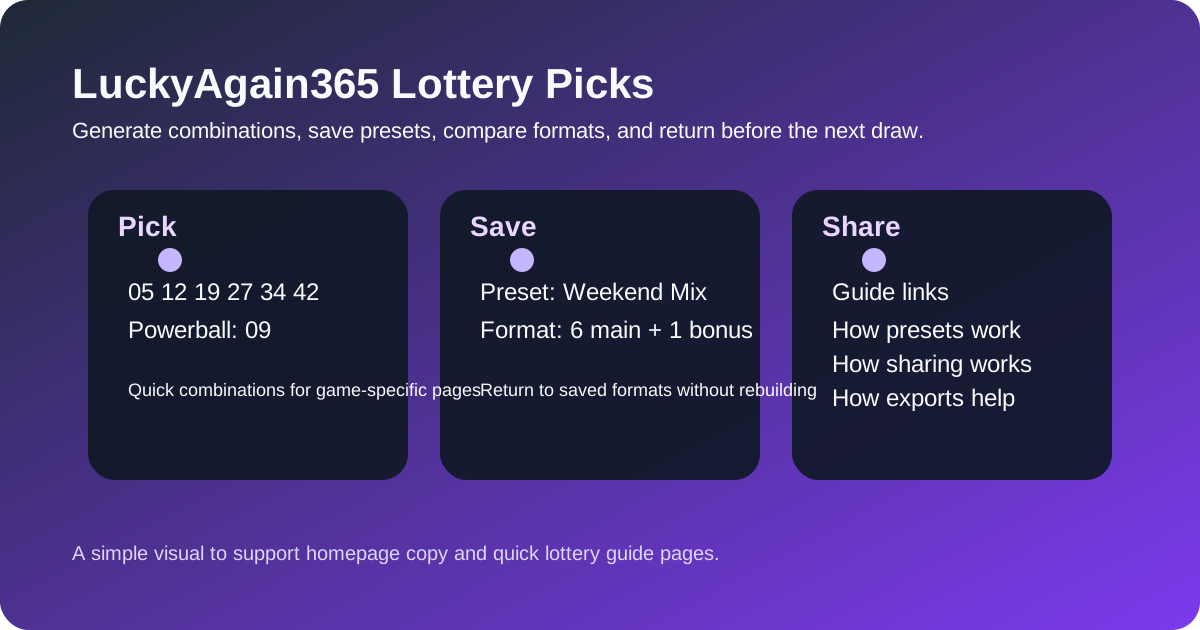
Quick Picks Routine for Repeat Lottery Sessions should help visitors finish a short visit with one clear result instead of opening page after page without deciding what to keep.
Use this guide when you want a repeatable path: choose a draw, generate a few lines, compare them quickly, then save or share only the result that still looks useful after a second review.
Start with one draw and one purpose
A repeat routine works because it removes unnecessary decisions. Open one draw page, confirm the number format, and decide whether the session is about generating a fresh line, reopening a saved preset, or preparing a shareable result.
When the starting purpose is clear, the rest of the session becomes lighter. You do not need to keep changing draws or adding filters just because the tool allows it. The most useful quick-pick flows are short, stable, and easy to repeat.
Generate a small batch, not a noisy pile
Three to five lines are usually enough for a comparison pass. That amount gives you room to notice balance, repetition, and whether one line is easier to keep than the rest without creating clutter.
Once the first batch appears, stop generating for a moment and review what you already have. The goal is not to prove that more output is always better. The goal is to produce one result that is actually worth the next action.
Review before you save or share
Review means checking whether the line still fits the selected draw, whether the numbers are readable, and whether you would be comfortable reopening or sending that exact result later. If the answer is yes, the routine has done its job.
If the answer is no, make one small change and generate again. Do not turn one quick session into a long loop of tiny adjustments. A good routine gives you a clean stopping point.
Choose the right finishing step
After review, there are only a few useful endings. Save the setup if you expect to reopen it, share the result if someone else needs it, or export JSON if you want a structured backup. Those endings keep the session productive instead of disposable.
The important part is to choose one ending and finish. Visitors return to the same tool because it feels reliable, and reliability comes from ending with something reusable rather than leaving the page empty-handed.
Common mistakes in repeat sessions
The most common mistake is opening too many help pages before action. Another is generating too many lines and then refusing to choose one. Both problems make a light tool feel heavier than it is.
A cleaner approach is to keep the path simple: one draw, one short batch, one quick comparison, one final action. That rhythm is what makes a quick-pick routine feel stable across many visits.
Quick answers
Why does a quick-pick routine matter?
Because repeat sessions feel better when the path stays recognizable and short.
How much variation should the routine allow?
Enough to compare results, but not so much that every visit becomes a new system.
What is the best ending to the routine?
The best ending is one saved, shared, or exported result that is worth reopening later.
To continue, open the lottery home, use the preset guide, or move to the sharing guide.
How this page fits the LuckyAgain365 Lottery path
Quick Picks Routine for Repeat Lottery Sessions should always shorten the route between a question and the next useful action. On this site, the right action is usually one of four things: open the generator, compare a small set of lines, save a preset that still makes sense later, or share and export a finished result. That product path matters more than broad theory because visitors normally arrive with a practical goal and want to leave with a practical outcome.
That is why the page should be read as part of a compact tool journey instead of as a detached article. Every section should help the reader make one better decision than before, then continue into the next correct page with less hesitation and less wasted motion.
What a strong session looks like in practice
A strong session is usually short, clear, and easy to repeat. The visitor chooses one draw, generates only a manageable batch of lines, reviews what appeared, and then commits to the next step instead of spinning in place. When the session stays compact, the generator feels more trustworthy because each action has an obvious reason behind it.
That practical discipline also improves long-term value. Presets become easier to name, comparison notes become easier to understand, and shared results become easier for another person to read because the original session was not overloaded with unnecessary steps or contradictory choices.
What to confirm before ending the visit
Before the page has done its job, the reader should be able to answer a few simple questions. Is the current draw still the right one? Is the result readable enough to keep? Is the next action clear: save, share, export, or rerun once with one small adjustment? Those checks are lightweight, but they are what prevent a quick tool visit from ending in ambiguity.
When the answers are clear, the visitor should stop browsing and finish the task. Lightweight tools create trust by helping people finish, not by keeping them scrolling. That finishing mindset is part of the long-term value of a page like this because it turns one-off visits into repeatable habits.
Where this topic creates long-term value
The long-term traffic value of Quick Picks Routine for Repeat Lottery Sessions comes from repeat usefulness rather than novelty. People search for these routes because they want a fast answer tied to a real generator task. Pages that stay close to that task can keep earning returns over time because the intent is durable, the next click is predictable, and the content can be refreshed without changing the page’s core role.
This is also why the page should keep linking back into the main product path. The best content assets on LuckyAgain365 Lottery are not isolated essays. They are support pages that strengthen the homepage, the draw-specific generators, the preset-saving flow, the sharing flow, and the export path instead of competing with them.